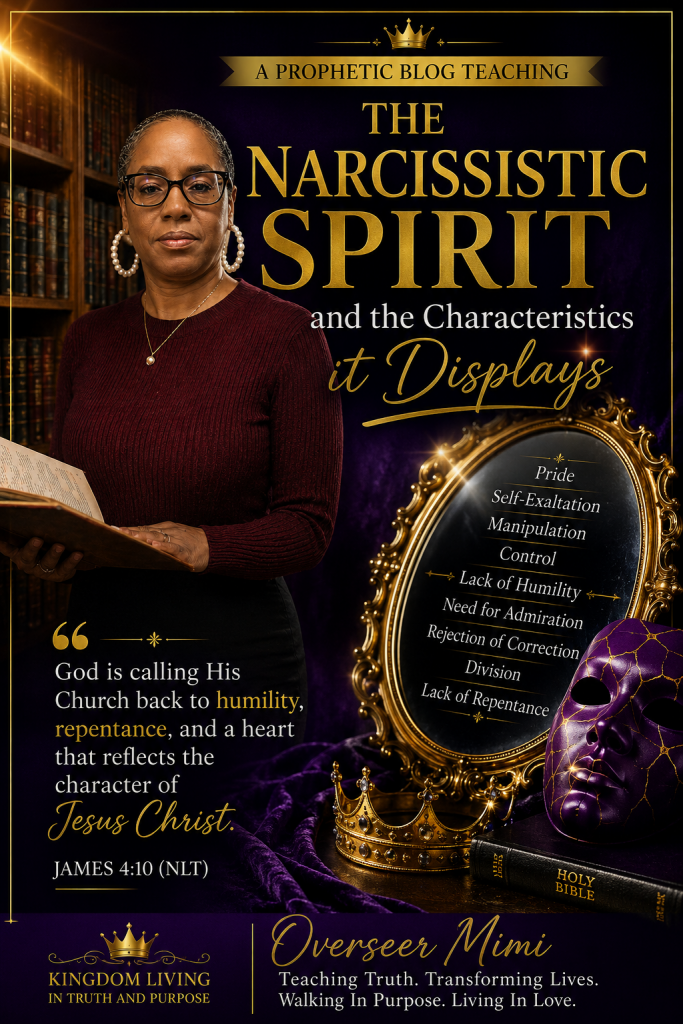
The Body of Christ is living in a season where discernment is no longer optional—it is essential. We are witnessing attitudes, behaviors, and patterns that have become normalized by society but stand in direct opposition to the character of Jesus Christ. One of those patterns is what many refer to as a narcissistic spirit. While “narcissism” is commonly recognized as a psychological term, Scripture has long revealed the danger of pride, self-exaltation, self-centeredness, and an unwillingness to submit to God. As believers, our responsibility is not to label people but to discern fruit. Jesus taught us that a tree is known by the fruit it bears, and the Holy Spirit gives us wisdom to recognize when a heart is yielding to the flesh instead of to God.
The narcissistic spirit is driven by self. Everything revolves around personal recognition, personal desires, personal gain, and personal importance. It seeks to elevate itself above others while resisting humility, accountability, and genuine repentance. This spirit does not reflect the nature of Christ, who humbled Himself, became a servant, and laid down His own life for others. Instead, it continually seeks attention, admiration, validation, and control. Left unchecked, these characteristics destroy relationships, divide churches, hinder spiritual growth, and keep individuals from walking in the fullness of God’s purpose.
One of the first characteristics displayed by a narcissistic spirit is an inability to receive correction. The moment truth is spoken, offense rises. Rather than examining the heart, the individual begins defending their actions, shifting blame, or attacking the one bringing correction. Scripture teaches us that godly correction is an act of love, not rejection. The Holy Spirit convicts us so that we may repent and grow, but pride convinces a person they have little or nothing to change. Proverbs 12:1 (NLT) says, “To learn, you must love discipline; it is stupid to hate correction.” A teachable heart welcomes correction because it understands that transformation cannot happen without it.
Another characteristic is the continual need to be right. Even when evidence proves otherwise, a narcissistic spirit struggles to admit fault because doing so threatens the image it has carefully created. It will often rewrite conversations, minimize wrongdoing, or place responsibility on someone else. This is the complete opposite of biblical repentance. The Holy Spirit leads us to acknowledge our sin without excuses. God cannot heal what we continually refuse to admit exists. Humility says, “Lord, search me.” Pride says, “The problem is everyone else.”
The narcissistic spirit also seeks to control people through manipulation. It may use guilt, intimidation, fear, flattery, emotional outbursts, or even silence to influence the decisions of others. Rather than allowing people to make choices freely, it attempts to pressure them into compliance. This is not the way of Christ. God never manipulates His children. The Holy Spirit convicts, instructs, and leads, but He never forces obedience. Love never controls; it serves. Whenever control replaces love, wisdom should cause us to pause and discern what spirit is operating.
Another revealing characteristic is the constant desire for recognition and admiration. Every accomplishment becomes an opportunity to receive praise. Every act of service seeks acknowledgment. Every conversation somehow returns to self. Jesus warned His followers not to practice righteousness for the purpose of being seen by others. Our motivation should always be to glorify God rather than ourselves. Matthew 6:1 (NLT) reminds us, “Watch out! Don’t do your good deeds publicly, to be admired by others, for you will lose the reward from your Father in heaven.” There is nothing wrong with appreciation, but there is everything wrong with living for applause instead of the approval of God.
A narcissistic spirit also struggles to celebrate the success of others. Instead of rejoicing when God blesses another believer, jealousy, comparison, and competition begin to grow. Every promotion is viewed as a personal loss. Every blessing received by someone else becomes a reason for resentment. The Kingdom of God does not operate through competition but through cooperation. God has assigned every believer a unique purpose, and another person’s calling never diminishes your own. A heart surrendered to the Holy Spirit can genuinely celebrate what God is doing in someone else’s life because it trusts the Father’s timing and plan.
This spirit often avoids accountability because accountability exposes what pride wants to hide. Healthy believers understand the value of spiritual leadership, wise counsel, and loving correction. They recognize that accountability is protection, not punishment. The narcissistic spirit, however, resists oversight, rejects instruction, and prefers relationships where it cannot be challenged. Proverbs 11:14 (NLT) teaches, “Without wise leadership, a nation falls; there is safety in having many advisers.” God places mature believers in our lives not to control us but to help us remain steadfast in truth.
Perhaps one of the saddest characteristics is the inability to genuinely repent. There may be tears, emotional responses, or carefully chosen words, but true repentance produces lasting change. Scripture teaches that godly sorrow leads to repentance, and repentance always results in a changed direction. Apologies without transformation are merely words. The Holy Spirit does not simply call us to feel sorry for our actions; He calls us to turn away from them completely and walk in obedience.
As the Body of Christ, we must guard against allowing these characteristics to take root within our own hearts. This teaching is not an invitation to identify everyone else who may display these traits. Instead, it is a call for personal examination. Before pointing to another person, we must first invite the Holy Spirit to search us. Psalm 139:23–24 (NLT) declares, “Search me, O God, and know my heart; test me and know my anxious thoughts. Point out anything in me that offends you, and lead me along the path of everlasting life.” That prayer requires humility, honesty, and a willingness to change.
The Lord is calling His Church back to the character of Christ. He is calling us away from pride and toward humility, away from self-exaltation and toward servanthood, away from manipulation and toward love, away from defensiveness and toward repentance. The Kingdom of God has never been built upon personalities; it has always been built upon surrendered hearts. Those who humble themselves before the Lord will be the ones He entrusts with greater responsibility because they understand that all glory belongs to Him.
May we never become so consumed with ourselves that we lose sight of Christ. Instead, let our prayer be that every trace of pride, selfish ambition, manipulation, and self-exaltation be removed from our hearts. May the fruit of the Holy Spirit become the defining evidence of our lives, so that when others see us, they see the character of Jesus Christ reflected through us. James 4:10 (NLT) declares, “Humble yourselves before the Lord, and he will lift you up in honor.” May that be the posture of every believer who desires to walk in truth and in the power of the Holy Spirit.