From The Desk Of The Apostle
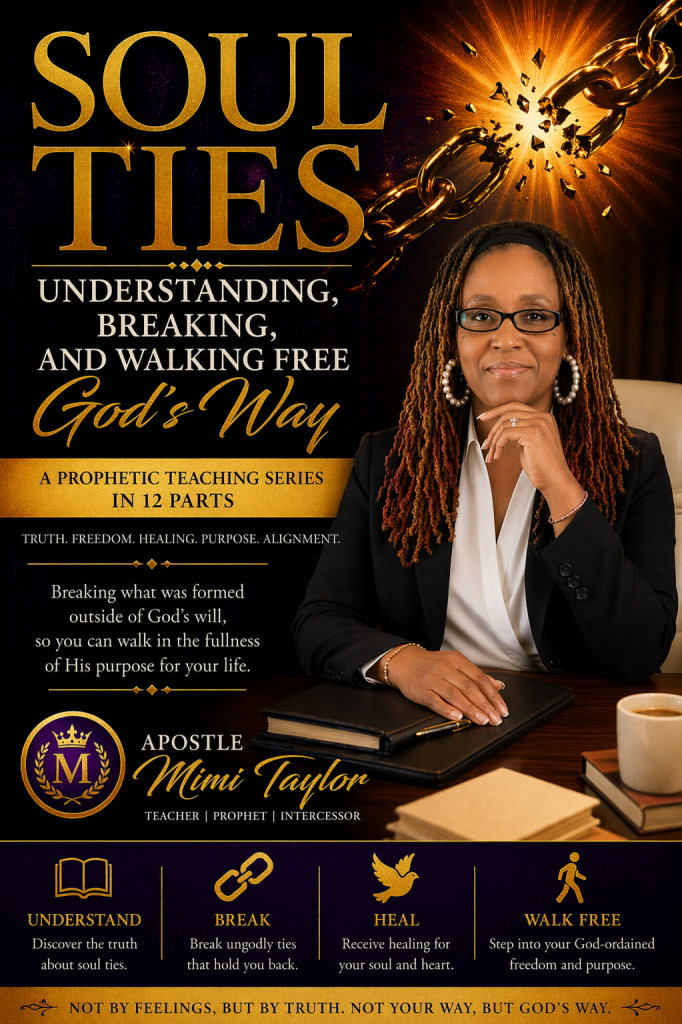
Soul Ties: Understanding, Breaking, and Walking Free — God’s Way
Part 1: What Are Soul Ties—God’s Definition, Not Man’s
Apostle Mimi Taylor
Soul ties are one of the most misunderstood spiritual realities within the Body of Christ. Many define them based on feelings, emotional attachment, or past relationships, but soul ties are not merely emotional—they are spiritual connections that impact the mind, will, and emotions. When something is not understood correctly, it cannot be addressed correctly. And this is why many remain bound in areas they believe they have already moved on from.
The soul consists of three components: the mind (how you think), the will (how you choose), and the emotions (how you feel). When a connection is formed within the soul, it creates influence. This influence is what gives a soul tie its power. It is not just about who you were connected to—it is about what that connection still has access to within you.
God’s Word reveals the depth of connection when it says in Genesis 2:24 (NLT), “This explains why a man leaves his father and mother and is joined to his wife, and the two are united into one.” This union is not just physical—it is spiritual and soulish. What God designed for covenant was meant to be sacred, intentional, and aligned. But when this level of connection happens outside of God’s order, it creates ties that were never meant to exist.
This is where misunderstanding enters. Many people interpret soul ties through their own experiences rather than through the Word of God. They say things like, “I just feel connected,” or “I can’t explain why I can’t let go,” without recognizing that they are describing the effects of a spiritual bond. Feelings may reveal the tie, but they are not the root of it.
Amos 3:3 (NLT) asks a powerful question: “Can two people walk together without agreeing on the direction?” Agreement is what forms connection. Connection is what forms ties. This means that a soul tie is not just formed through physical interaction, but through agreement—whether emotional, mental, or spiritual. What you come into agreement with, you become connected to.
There are two types of soul ties: God-ordained and ungodly. God-ordained soul ties are formed within His will—relationships that are aligned, purposeful, and healthy. These ties bring peace, growth, clarity, and spiritual strengthening. They do not compete with God—they support your walk with Him.
Ungodly soul ties, however, are formed outside of God’s design. These ties often bring confusion, emotional instability, spiritual distraction, and a pull that does not align with peace. What makes them dangerous is that they feel strong, but they are not healthy. They feel real, but they are not rooted in truth.
This is why not every connection is from God, even if it feels significant.
Many believers mistake intensity for purpose. Just because something feels deep does not mean it is divine. Just because it is hard to walk away does not mean it is meant to stay. This is where discernment is necessary. Discernment does not operate by feelings—it operates by alignment with God’s Word.
Another reason soul ties are misunderstood is because many do not recognize that they can exist even after separation. A person may no longer be physically present, but the tie can remain active through thoughts, emotions, and influence. This is why individuals can move on outwardly, but still feel bound inwardly. The connection has not been broken—it has only been distanced.
1 Corinthians 6:17 (NLT) says, “But the person who is joined to the Lord is one spirit with him.” This reveals God’s design for connection—that the primary and strongest tie in a believer’s life should be with Him. When that connection is not fully established or understood, other ties begin to take influence where only God should have authority.
Soul ties are not something to ignore or dismiss. They must be understood spiritually so they can be addressed correctly. What is not identified cannot be broken. What is not understood cannot be corrected.
This is why this teaching is necessary.
The question is not just, “Who were you connected to?”
The question is, “What still has influence over your thoughts, your decisions, and your emotions?”
Because what still has influence…
is what you are still tied to.
Soul Ties: Understanding, Breaking, and Walking Free — God’s Way
Part 2: How Soul Ties Are Formed—What You Allowed, What You Agreed With
Apostle Mimi Taylor
Soul ties do not form randomly—they are established through access, agreement, and connection. Many in the Body of Christ struggle to break free because they are trying to disconnect from something they never understood how it was formed. What is not understood cannot be properly confronted, and what is not confronted will continue to influence.
One of the primary ways soul ties are formed is through agreement. Agreement is not always verbal—it can be emotional, mental, or spiritual. What you come into agreement with, you open yourself up to. This is why Scripture warns in 2 Corinthians 6:14 (NLT), “Don’t team up with those who are unbelievers. How can righteousness be a partner with wickedness? How can light live with darkness?” This is not just about relationships—it is about alignment. When there is agreement, there is connection. When there is connection, there is influence.
Another way soul ties are formed is through intimacy—both physical and emotional. Many only associate soul ties with physical intimacy, but emotional intimacy can be just as binding. When you share your vulnerabilities, your struggles, your thoughts, and your inner life with someone outside of God’s order, you create a connection that gives them access to your soul. This is why Proverbs 4:23 (NLT) says, “Guard your heart above all else, for it determines the course of your life.” The heart is not just emotional—it is the gateway to your soul. What you allow in will eventually influence how you think, feel, and choose.
Soul ties are also formed through repeated exposure. Consistent communication, constant interaction, and ongoing connection create familiarity, and familiarity builds attachment. This is where many are unaware of what is happening. What started as casual becomes consistent, and what becomes consistent begins to take root. Before long, there is a pull that feels difficult to break—not because it is right, but because it has been reinforced over time.
This is why 1 Corinthians 15:33 (NLT) warns, “Don’t be fooled by those who say such things, for ‘bad company corrupts good character.’” Corruption does not happen instantly—it happens through repeated exposure. The more access something has, the more influence it gains. This is how ungodly soul ties quietly form without being recognized.
Another major doorway is trauma and unmet needs. When individuals have experienced rejection, abandonment, neglect, or emotional voids, they often form deeper attachments to those who meet those needs—even if the connection is not healthy. What should be healed by God is instead filled by people, and this creates ties that are rooted in dependency rather than alignment. This is why many feel they “need” someone, when in reality, they have become tied through what was never healed.
Psalm 147:3 (NLT) says, “He heals the brokenhearted and bandages their wounds.” Healing was never meant to come through people—it comes through God. When healing is sought outside of Him, it creates connections that feel necessary but are not ordained.
Soul ties can also be formed through spiritual connection—what you receive, submit to, or allow to minister to you. This includes teachings, influences, and even spiritual environments. When you open yourself spiritually without discernment, you can form ties that affect how you think, how you perceive, and how you respond. Not everything that feels spiritual is from God, and not every connection that feels deep is aligned.
This is why discernment is critical. 1 John 4:1 (NLT) says, “Dear friends, do not believe everyone who claims to speak by the Spirit. You must test them to see if the spirit they have comes from God.” If you do not test what you are connecting to, you will tie yourself to things that were never meant to have influence over your life.
Many are asking why they feel bound, confused, or emotionally pulled in directions they do not understand. The answer is often found in what was allowed, what was entertained, and what was agreed with. Soul ties do not require permission to stay—they only require access to be formed. But once formed, they must be addressed intentionally.
This is not about condemnation—it is about awareness. God does not reveal to shame—He reveals to free. When you understand how something was formed, you can begin the process of breaking it. But until there is understanding, there will continue to be cycles.
The question is no longer just, “What am I connected to?”
The question is, “How was this formed—and what did I allow that gave it access?”
Because what you allowed access to…
has now gained influence over you.
Soul Ties: Understanding, Breaking, and Walking Free — God’s Way
Part 3: Signs You Are Bound By Ungodly Soul Ties
Apostle Mimi Taylor
Ungodly soul ties do not always announce themselves—they reveal themselves through patterns, behaviors, and internal struggles that many believers have learned to overlook, excuse, or normalize. What makes them dangerous is not just their presence, but their subtlety. Many are bound and do not even recognize it because they have become accustomed to the influence.
One of the clearest signs of an ungodly soul tie is an unexplainable emotional attachment that remains even when the connection is no longer present or healthy. You may have walked away physically, but internally there is still a pull—thoughts that linger, emotions that resurface, and a sense of connection that does not align with peace. This is not just memory—it is influence. This is why Ecclesiastes 3:6 (NLT) reminds us there is “a time to search and a time to quit searching, a time to keep and a time to throw away.” When something has ended but you cannot release it, it reveals there is a tie that has not been broken.
Another sign is mental preoccupation. When your thoughts consistently return to a person, situation, or past connection—especially in ways that affect your focus, your decisions, or your emotional stability—it reveals that access is still present. You may find yourself replaying conversations, imagining scenarios, or being distracted from what God is doing now because your mind is tied to what was. This is why 2 Corinthians 10:5 (NLT) instructs us to “capture their rebellious thoughts and teach them to obey Christ.” If your thoughts are not aligned, it is because something still has influence over your mind.
Emotional instability is another indicator. Ungodly soul ties often produce cycles—highs and lows, peace and confusion, clarity and emotional overwhelm. One moment you feel resolved, the next you feel pulled back into what you thought you had moved past. This inconsistency is not from God. 1 Corinthians 14:33 (NLT) says, “For God is not a God of disorder but of peace.” Where there is confusion, instability, and emotional unrest, something is out of alignment.
Another sign is difficulty moving forward. You may find that you are unable to fully step into new relationships, new opportunities, or new seasons because something from your past still has a hold on you. This can manifest as comparison, hesitation, fear, or even self-sabotage. You are physically present in one place, but emotionally tied to another. This is why Isaiah 43:18 (NLT) says, “But forget all that—it is nothing compared to what I am going to do.” If you cannot release what was, you will struggle to receive what is coming.
Ungodly soul ties also reveal themselves through misaligned desires. You may begin to desire things, tolerate behaviors, or entertain thoughts that do not align with who you are in Christ. What once felt wrong may begin to feel acceptable. What you once resisted, you now entertain. This is influence. This is why Romans 12:2 (NLT) says, “Don’t copy the behavior and customs of this world, but let God transform you into a new person by changing the way you think.” When your desires shift away from truth, it reveals that something else is shaping your thinking.
Another sign is spiritual distraction and disconnection. Ungodly soul ties will always compete with your relationship with God. You may find it harder to focus in prayer, harder to stay consistent in the Word, or more drawn to thoughts and emotions tied to the connection than to God Himself. This is not coincidence—it is interference. Matthew 6:24 (NLT) says, “No one can serve two masters.” Whatever has your attention has influence, and whatever has influence will affect your alignment.
There is also the sign of justification. When you begin to justify a connection that you know is not aligned, it reveals that your emotions are overriding truth. You may say, “It’s not that bad,” or “I can handle it,” or “God understands,” while ignoring what God has already shown you. This is where many become deceived—not because they do not know the truth, but because they have chosen to reason around it. Jeremiah 17:9 (NLT) says, “The human heart is the most deceitful of all things, and desperately wicked. Who really knows how bad it is?” When the heart is not submitted, it will justify what should be confronted.
Lastly, ungodly soul ties are evident when there is a loss of peace. Even if everything looks fine outwardly, inwardly there is unrest. You cannot fully settle, you cannot fully align, and there is always something pulling at you beneath the surface. Colossians 3:15 (NLT) says, “And let the peace that comes from Christ rule in your hearts.” If peace is not ruling, something else is.
These signs are not meant to condemn—they are meant to reveal. God exposes what is hidden so that it can be broken. Many have been asking why they feel stuck, why they feel pulled, why they feel inconsistent. The answer is not always external—it is often internal. It is not always about what is happening around you, but what still has access within you.
The question is not just, “Do I have a soul tie?”
The question is, “What is still influencing me that should no longer have access?”
Because what still has access…
is what still has power.
From the Desk of the Apostle
The Flesh Is Our Enemy Not Our Friend, Stop Putting Your Trust In It
By Apostle M. Taylor
There is a deception that has quietly settled into the lives of many believers—the belief that the flesh can be trusted, managed, or even partnered with. But the truth of God’s Word makes it clear: the flesh is not your friend. It does not lead you toward God—it pulls you away from Him. “The sinful nature wants to do evil, which is just the opposite of what the Spirit wants” (Galatians 5:17 NLT). This is not a partnership; this is a war. And whether we acknowledge it or not, this war is active every single day within us.
The flesh will always oppose the Spirit. It will resist correction, reject discipline, and seek comfort over obedience. It does not desire truth—it desires control. And many have unknowingly come into agreement with their flesh, allowing feelings, emotions, wounds, and personal desires to dictate decisions rather than being led by the Holy Spirit. But anything led by the flesh will always produce what is temporary, unstable, and ultimately destructive. It may look good in the beginning, it may even feel right in the moment, but its end will never align with God’s will (Romans 8:6 NLT).
The danger is not just in having flesh—we all have it. The danger is in trusting it. Trusting how you feel. Trusting what you want. Trusting your interpretation over God’s instruction. “Trust in the Lord with all your heart; do not depend on your own understanding” (Proverbs 3:5 NLT). Because your understanding, when rooted in the flesh, will lead you into places God never called you to go. It will cause you to justify what God has already condemned. It will cause you to delay what God said to do now. And it will cause you to build on foundations that cannot stand.
The flesh is subtle. It does not always appear sinful—it often appears reasonable, logical, even wise. It will tell you, “Protect yourself.” It will tell you, “Do what feels right.” It will tell you, “You deserve this.” But the question is—does it align with God? Because the flesh can sound convincing, but it is never aligned. This is why it is dangerous—because it sounds like you. It speaks in your voice. It uses your experiences. It draws from your emotions. And if you are not discerning, you will follow it thinking you are being led correctly.
Romans 8:7 (NLT) tells us, “For the sinful nature is always hostile to God. It never did obey God’s laws, and it never will.” That means there is nothing in the flesh that can be trained into obedience. It is not improved—it is crucified. It is not managed—it is denied. It is not refined—it is put to death daily. This is why the struggle remains for many—because they are trying to discipline what God said must die.
And here is where it goes deeper—when the flesh is not crucified, it begins to open doors. Not just natural consequences, but spiritual access. Because where the flesh is leading, the Spirit is not governing. And where the Spirit is not governing, there is vulnerability. This is where the enemy begins to gain influence—through thoughts, through patterns, through cycles that keep repeating. Not because God has abandoned you, but because the flesh has been given authority it was never meant to have (Ephesians 4:27 NLT).
Many are asking, “Why do I keep falling into the same things?” The answer is not always external—it is internal agreement with the flesh. It is choosing comfort over correction. It is choosing desire over discipline. It is choosing your way over God’s way. And until that agreement is broken, the cycle will continue.
Jesus said, “If any of you wants to be my follower, you must give up your own way, take up your cross daily, and follow me” (Luke 9:23 NLT). This is not a one-time decision—it is daily. Because the flesh does not die once—it must be denied continually. Every day there is a choice—Spirit or flesh. Obedience or self. Truth or feeling.
When you put your trust in the flesh, you weaken your spiritual discernment. You begin to make decisions based on what is comfortable instead of what is commanded. You begin to prioritize what satisfies you instead of what pleases God. And slowly, without realizing it, you step out of alignment, even while still believing you are walking with Him.
But when you choose to walk in the Spirit, everything shifts. “So I say, let the Holy Spirit guide your lives. Then you won’t be doing what your sinful nature craves” (Galatians 5:16 NLT). Notice—it does not say fight the flesh in your own strength. It says walk in the Spirit. Because the answer is not striving—it is surrender. The more you yield to the Spirit, the less power the flesh has. The more you obey, the quieter the flesh becomes.
This is a call to examine deeply—not surface level, but honestly. What have you been trusting? Your feelings? Your desires? Your wounds? Your reasoning? Or God? Because whatever you trust will lead you. And whatever leads you will shape your outcome.
The flesh will never lead you into righteousness. It will never produce what God has promised. It will never align with His will. And it will never bring lasting fruit. “Those who live only to satisfy their own sinful nature will harvest decay and death from that sinful nature” (Galatians 6:8 NLT). That is the end of trusting the flesh—decay, not life.
So today, make a decision. Stop consulting what God has already told you to crucify. Stop trusting what is working against you. Stop entertaining what is opposing your growth. And begin to yield—fully, completely, without compromise—to the Holy Spirit.
Because victory is not found in trying harder.
It is found in dying daily.
It is found in surrender.
It is found in choosing God over yourself.
And when that choice is made consistently, the flesh loses its voice, and the Spirit takes His rightful place.
God’s Grace Is Sufficient — But Are We Misusing It?
By Apostle M. Taylor
Grace is one of the most powerful and beautiful gifts God has given to humanity. It is through grace that we are saved, restored, forgiven, and brought into relationship with Him. The Word of God reminds us in 2 Corinthians 12:9, “My grace is sufficient for thee: for my strength is made perfect in weakness.” Grace meets us in our weakness, covers our failures, and provides the strength we do not possess on our own.
Yet an important question must be asked in this generation: Are we receiving God’s grace with reverence, or are we misusing it as permission to remain unchanged?
Many believers rejoice in the message of grace, but fewer understand the responsibility that comes with it. Grace was never intended to be a license for sin, complacency, or spiritual laziness. Instead, grace is meant to empower transformation. It is the divine assistance of God that enables us to live holy, obedient, and surrendered lives.
The Apostle Paul addressed this very issue in Romans 6:1–2, asking, “What shall we say then? Shall we continue in sin, that grace may abound? God forbid.” Paul makes it clear that grace does not excuse sin—it equips us to overcome it.
Unfortunately, in today’s culture, grace is often misunderstood. Some have turned grace into a spiritual safety net that allows them to remain comfortable in behaviors God has called them to leave behind. Rather than allowing grace to lead them into repentance, humility, and growth, they use it to justify compromise.
But true grace does something very different.
True grace confronts us.
True grace convicts us.
True grace changes us.
Grace does not simply forgive us; it transforms us from the inside out. When the grace of God truly touches a life, it produces a desire to walk differently, think differently, and live differently. It awakens within us a hunger for righteousness and a reverence for the holiness of God.
Titus 2:11–12 declares, “For the grace of God that bringeth salvation hath appeared to all men, teaching us that, denying ungodliness and worldly lusts, we should live soberly, righteously, and godly, in this present world.”
Notice what the scripture says: Grace teaches us.
It trains us.
It instructs us to deny ungodliness.
Grace is not passive—it is active. It works within us to align our hearts with God’s will.
When believers misuse grace, they unknowingly slow their own spiritual growth. They remain spiritually immature because they resist the correction and transformation that grace is designed to bring. Instead of moving deeper into relationship with God, they remain at the surface.
But God’s grace invites us into something far greater.
Grace calls us to maturity.
Grace calls us to surrender.
Grace calls us to holiness.
It reminds us that while God’s mercy forgives us, His grace strengthens us to live in obedience.
So the real question is not whether God’s grace is sufficient—because it absolutely is. The question is how we are responding to it.
Are we allowing grace to refine our character?
Are we allowing grace to correct our attitudes?
Are we allowing grace to lead us away from sin and closer to Christ?
Or have we become comfortable receiving grace without allowing it to transform us?
God’s grace is not something to be taken lightly. It was purchased through the sacrifice of Jesus Christ on the cross. Every drop of grace we receive is connected to that sacrifice.
When we truly understand this, we begin to treat grace with humility and gratitude. We no longer see it as permission to stay the same, but as the divine power that enables us to become who God created us to be.
God’s grace is indeed sufficient—but it was never meant to leave us unchanged.
Let us receive it with reverence, walk in it with obedience, and allow it to produce the transformation that reflects Christ in our lives.
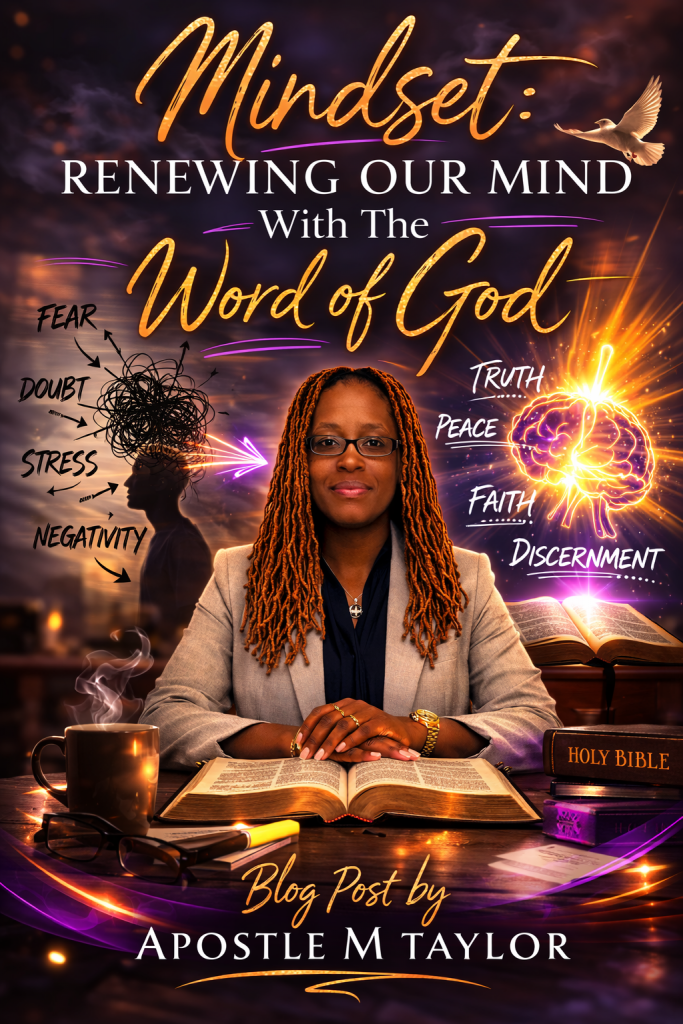
Mindset: Renewing Our Mind With the Word of God
By Apostle M. Taylor
The battlefield for every believer begins in the mind. Before actions manifest, before words are spoken, before decisions are made — thoughts are formed. The enemy understands this, which is why he targets the mind first. If he can influence your thinking, he can influence your direction. But God has already provided the strategy for victory: the renewing of the mind through His Word.
Romans 12:2 instructs us clearly: “Do not be conformed to this world, but be transformed by the renewing of your mind.” Transformation does not begin with behavior modification. It begins with mental renovation. You cannot live beyond the level of your thinking. If your mindset remains worldly, fearful, negative, or defeated, your life will eventually reflect it. But when your mind is aligned with the Word of God, your life begins to reflect heaven’s perspective.
A mindset shaped by the world is driven by emotion, comparison, insecurity, and self-reliance. It reacts quickly and reasons spiritually very little. It focuses on temporary outcomes instead of eternal purpose. However, a renewed mind thinks differently. It filters circumstances through faith. It measures decisions against Scripture. It refuses to allow feelings to override truth.
Renewing your mind is not a one-time event — it is a daily discipline. The Word of God must become more than something you hear on Sunday; it must become the lens through which you see life. When challenges arise, what speaks louder — your anxiety or God’s promises? When opportunities present themselves, what guides you — impulse or wisdom? Your response reveals the condition of your mindset.
The Word of God corrects distorted thinking. It challenges pride. It exposes fear. It dismantles lies. Many believers struggle not because God has not spoken, but because they have not replaced old thought patterns with His truth. You cannot hold onto negative beliefs and expect positive spiritual outcomes. You cannot rehearse doubt and expect faith to grow. Renewal requires intentional replacement.
Philippians 4:8 gives us direction for healthy thinking: think on what is true, noble, just, pure, lovely, and of good report. This is not positive thinking for the sake of optimism — this is disciplined thinking rooted in truth. When your mind dwells on what aligns with God, your peace increases. When your thoughts are saturated with Scripture, your discernment sharpens.
A renewed mind also strengthens spiritual authority. When you know what God has said, you are less likely to be shaken by what others say. When your thinking is grounded in Scripture, you are not easily manipulated by culture, fear, or emotional pressure. Stability begins in the mind. Confidence in God begins in the mind. Victory begins in the mind.
However, renewing your mind requires surrender. You must be willing to admit that some of your previous thought patterns were not aligned with God. Pride resists correction, but humility invites transformation. The Holy Spirit works within us, but He partners with our willingness to apply the Word.
Mindset determines direction. Direction determines destiny. If you desire a life that reflects God’s will, you must cultivate a mind that reflects His Word. Feed your spirit daily. Guard your thoughts intentionally. Speak Scripture over your circumstances. Refuse to allow negativity to take root.
Renewing your mind is not about becoming perfect — it is about becoming aligned. As your mind aligns with God’s truth, your emotions begin to stabilize, your decisions become wiser, and your faith becomes stronger. The Word of God is not just information; it is transformation. And when your mindset is renewed, your life will follow.
Victory does not begin in your hands. It begins in your head — and it is sustained by the Word of God.
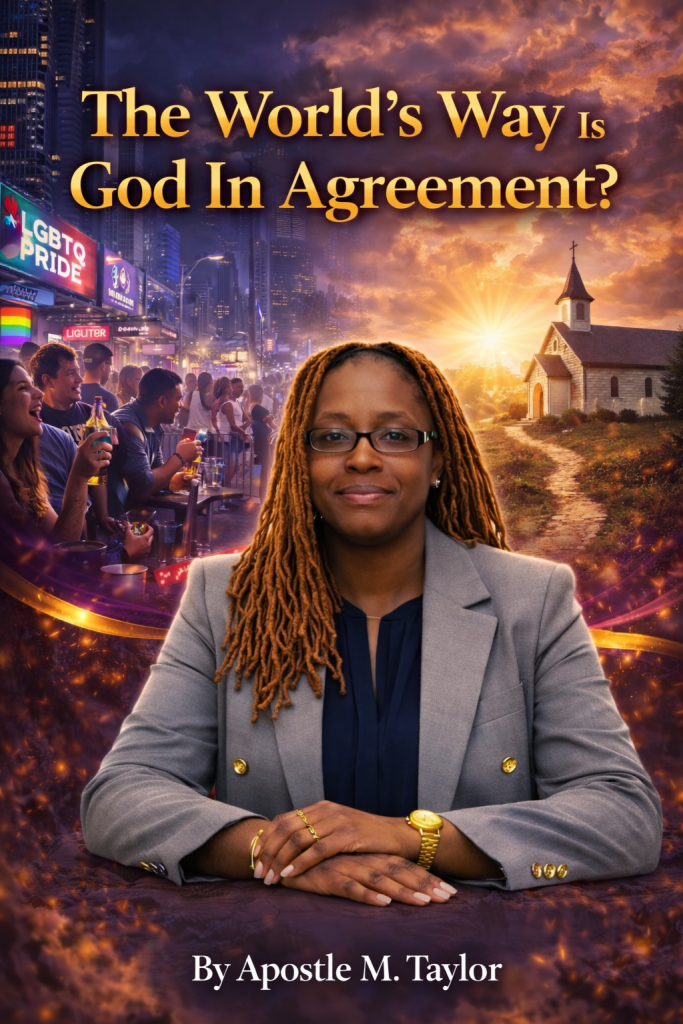
The World’s Way Is God In Agreement?
By Apostle M. Taylor
There is a dangerous question circulating quietly in the hearts of many believers today: Is God really in agreement with the way the world is going? Culture shifts, standards change, morals evolve, and opinions grow louder. But the real issue is not whether the world has changed — the real issue is whether God has. And the answer is clear: He has not.
The world operates on preference. God operates on principle.
The world follows feelings. God follows truth.
The world adapts to culture. God establishes righteousness.
Some have begun to assume that because something is widely accepted, celebrated, or normalized, it must somehow align with God’s will. But popularity has never been proof of righteousness. Agreement with culture does not equal agreement with heaven. When we measure truth by trends instead of Scripture, we slowly begin to reshape God into an image that suits us — rather than allowing Him to shape us into His image.
Scripture declares in Romans 12:2, “Do not be conformed to this world, but be transformed by the renewing of your mind.” Notice the instruction. We are not called to blend in. We are not called to modify truth to make it more digestible. We are called to be transformed. Transformation requires separation from worldly patterns of thinking. It requires spiritual discernment. It requires courage.
The world often promotes self-expression above self-denial. It celebrates independence from authority. It encourages the pursuit of pleasure without consequence. Yet Jesus taught the opposite. He said to deny yourself, take up your cross, and follow Him. The path of righteousness has never been the wide road — it has always been narrow. And narrow roads are rarely popular.
There is a growing temptation to make God seem more “agreeable.” To soften His standards. To redefine holiness. To reinterpret sin. But God does not negotiate His Word to remain relevant. He does not adjust righteousness to fit cultural comfort. He is the same yesterday, today, and forever. The world may evolve, but truth remains anchored.
Now, this does not mean believers should operate with arrogance or condemnation. We are called to love. But love without truth becomes compromise. And truth without love becomes harshness. The balance is not found in agreement with the world — it is found in alignment with God.
When believers start asking whether God is in agreement with the world’s way, they must pause and ask a deeper question: Have I allowed the world to influence my understanding of God? Influence is subtle. It creeps in through media, conversations, trends, and even churches that prioritize acceptance over conviction. Without realizing it, many begin to see righteousness as extreme and compromise as compassion.
God’s way has always required faith. It requires standing firm when others bow. It requires obedience when others excuse. It requires discernment when others dismiss. Agreement with God may sometimes place you in disagreement with the world — and that is not a sign that you are wrong. It may very well be confirmation that you are walking in truth.
So the question remains: The World’s Way Is God In Agreement?
The answer is simple. God is not in agreement with what contradicts His Word. He is not aligned with what opposes His character. He does not bless what He has clearly spoken against. But He does extend grace, mercy, and opportunity for repentance.
The call for believers is clear: do not seek to make God agreeable to culture. Seek to align your life with Him. When we choose His way, even when it is unpopular, we choose eternal truth over temporary approval. And in the end, agreement with God will always matter more than agreement with the world.
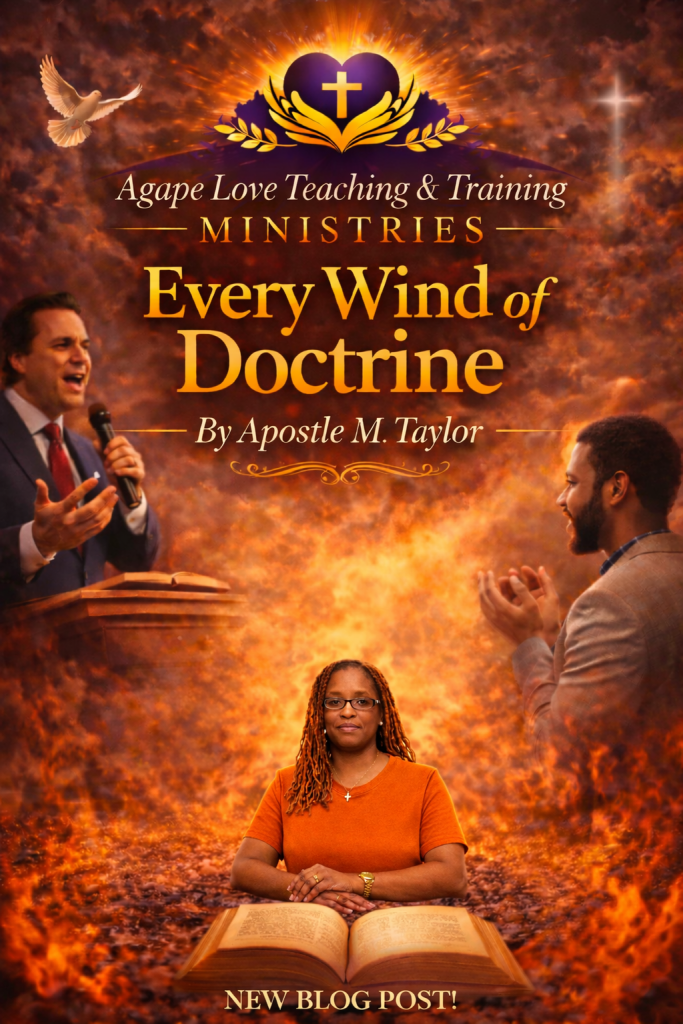
Every Wind of Doctrine
By Apostle M. Taylor
We are living in a time where truth is constantly being challenged, redefined, and diluted. Within the Body of Christ, many believers are being pulled in multiple directions by teachings that sound spiritual but are not always rooted in the full counsel of God. Scripture clearly warns us in Ephesians 4:14 that we should no longer be children, “tossed to and fro and carried about with every wind of doctrine.” This warning is not casual—it is urgent and necessary for the spiritual stability of every believer.
Every wind of doctrine represents teachings, beliefs, and spiritual perspectives that shift according to culture, emotion, personal experience, or human reasoning rather than remaining anchored in the unchanging Word of God. These winds do not always appear harmful on the surface. In fact, many of them sound encouraging, progressive, and appealing to the flesh. They promise comfort without correction, elevation without surrender, and spirituality without true transformation. Yet anything that removes the centrality of Christ, the authority of Scripture, and the necessity of holiness ultimately leads believers away from the path of spiritual maturity.
The danger of every wind of doctrine is found in its subtlety. Deception rarely announces itself boldly. It often comes wrapped in partial truth, persuasive language, and charismatic presentation. Teachings can sound wise and profound, yet lack the spiritual substance required to produce real growth. Many believers are drawn to messages that affirm their desires but do not challenge their character. They embrace teachings that soothe rather than sanctify. Over time, this creates a generation of believers who are spiritually informed but not spiritually transformed.
Spiritual instability occurs when believers do not develop deep roots in the Word of God. A person who relies solely on sermons, social media messages, or popular teachings without personally studying Scripture becomes vulnerable to doctrinal confusion. Without a solid foundation, every new teaching can appear valid. Every trending message can seem like revelation. But revelation without alignment to God’s Word is not divine—it is dangerous.
God never intended for His people to live in spiritual confusion. He calls us into maturity, stability, and discernment. Spiritual maturity is not measured by how much we hear, but by how well we are rooted in truth. Mature believers do not chase every new voice. They test what they hear. They examine teachings through the lens of Scripture and the leading of the Holy Spirit. They understand that truth does not change simply because culture changes.
One of the greatest strategies of the enemy in this season is to create spiritual distraction through excessive voices. When believers constantly consume different teachings without discernment, they become spiritually scattered. One message tells them one thing, another message tells them something different, and eventually they no longer know what to believe. This confusion weakens spiritual authority and disrupts spiritual growth. A divided mind cannot produce a stable walk with God.
Holiness, obedience, and surrender are often minimized in modern teachings because they challenge the flesh. However, any doctrine that removes the call to righteous living is not rooted in Christ. Jesus did not come only to comfort us—He came to transform us. True doctrine leads to repentance, renewal, and alignment with God’s will. It strengthens our relationship with Him and produces fruit that reflects His character.
Discernment is essential in guarding against every wind of doctrine. Discernment is not criticism or judgment; it is spiritual awareness given by the Holy Spirit. It allows believers to recognize what is of God and what is not. When a believer spends time in prayer, studies the Word consistently, and cultivates intimacy with the Holy Spirit, their spiritual sensitivity increases. They begin to sense when something is not aligned with truth, even if it sounds appealing.
The Body of Christ must return to a place of spiritual grounding. This means prioritizing personal study of the Word, maintaining a strong prayer life, and seeking God for understanding rather than relying solely on external voices. It also requires humility—the willingness to be corrected and led by truth rather than personal preference. Growth occurs when believers allow the Word of God to shape their thinking, their decisions, and their lifestyle.
God is raising up a mature and discerning people who will not be easily swayed by emotionalism, trends, or persuasive speech. He is calling His people to stand firmly on truth, to grow in spiritual understanding, and to remain anchored in Him regardless of what teachings arise. Stability in Christ produces clarity, and clarity produces strength.
In this season, the question is not simply what you are hearing—it is what you are rooted in. When your foundation is built on Christ and His Word, no wind of doctrine can move you. You will remain steady, grounded, and aligned with God’s purpose for your life.
Let this be the hour where believers grow beyond spiritual infancy into spiritual maturity. Seek truth. Study the Word. Remain sensitive to the Holy Spirit. And stand firm so that no wind of doctrine can pull you away from the foundation that has already been established in Christ.
#truth#fyp#spiritualgrowth#apostlemtaylor#KingdomLiving#blog#doctrine
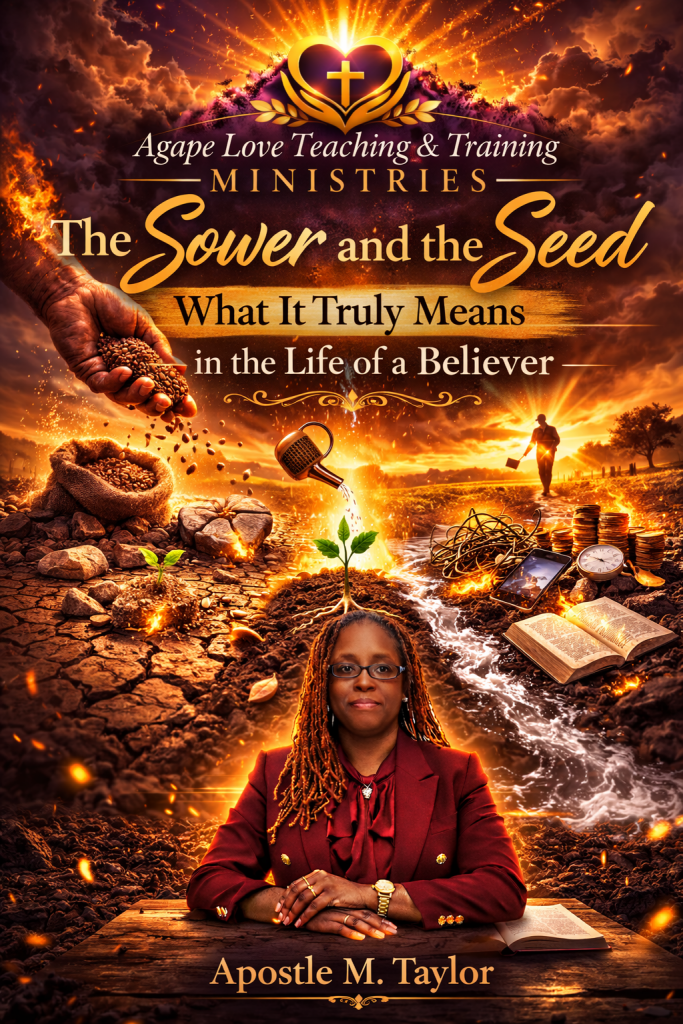
The Sower and the Seed: What It Truly Means in the Life of a Believer
By Apostle M. Taylor
In Matthew 13, Jesus gives one of the most powerful and revealing parables about the condition of the human heart—the Parable of the Sower. This parable is not just a story about seeds and soil; it is a spiritual mirror for every believer. It reveals how the Word of God is received, nurtured, rejected, or forgotten depending on the condition of the heart it falls upon. The sower represents the one who releases the Word of God, but the soil represents the heart of the hearer. The question is never whether God is speaking; the question is always whether we are positioned to receive what He is saying.
Jesus describes four types of soil: the wayside, the stony ground, the thorny ground, and the good ground. Each type represents a different response to the Word of God. The seed is always good because it comes from God, but the harvest is determined by the condition of the soil. This means that the outcome of the Word in our lives is not dependent on God’s ability to speak, but on our willingness to receive, guard, and obey what He has spoken.
The wayside represents a hardened heart. This is the heart that hears the Word but does not understand or value it. The Word sits on the surface and is quickly snatched away by the enemy. Many believers hear sermons, teachings, and correction, but because their hearts are hardened by pride, offense, or unbelief, the Word never penetrates. When the heart is not open, the Word cannot take root. A hardened heart will always remain unchanged because it refuses to allow God’s truth to enter and transform.
The stony ground represents a shallow heart. This believer receives the Word with excitement and emotion, but there is no depth. When trials, persecution, or challenges arise, the Word that once seemed powerful quickly fades away. A shallow relationship with God cannot sustain spiritual growth. Emotional excitement cannot replace spiritual rootedness. The Word must go deeper than feelings; it must be planted in obedience and consistency. Without depth, there will be no endurance.
The thorny ground represents a distracted and divided heart. The Word begins to grow, but it is choked by the cares of life, the pursuit of success, the desire for approval, and the love of worldly things. Many believers are not without the Word—they are simply too crowded. When the heart is filled with competing priorities, the Word cannot flourish. God will not compete with what we refuse to surrender. The thorns must be uprooted so the Word can grow freely.
Then there is the good ground—the heart that hears the Word, understands it, receives it, and lives by it. This is the heart that produces fruit. Good ground is not perfect ground; it is surrendered ground. It is a heart that remains teachable, humble, and obedient. When the Word falls on good ground, it produces transformation, maturity, and spiritual fruit that impacts not only the believer but everyone connected to them. Good ground does not just hear the Word—it becomes the Word in action.
This parable calls every believer to examine their own heart. What kind of soil are we? Are we allowing offense, pride, fear, or distraction to prevent the Word from taking root? Are we hearing God but refusing to obey? The sower continues to sow, but the harvest depends on the condition of the soil. God is always speaking, always revealing, always planting—but we must be willing to receive.
In the life of a believer, Matthew 13 is a call to spiritual cultivation. We must allow God to break up hardened places, remove stones of resistance, and uproot the thorns that choke His Word. A fruitful life in Christ does not happen by accident; it happens through intentional surrender. When we become good ground, the Word of God will not just visit our lives—it will transform them. And from that transformation will come a harvest that glorifies God and reflects His power through us.
When The Enemy’s Hold Runs Deep
By Apostle M. Taylor
There are seasons in life when the enemy’s grip feels stronger than our faith, tighter than our hope, and deeper than our understanding. It is in these seasons that many believers quietly struggle—smiling in public but battling privately. The enemy seeks to convince us that his hold is permanent, that the cycles we face cannot be broken, and that the strongholds we wrestle with will never release us. Yet the truth remains: no hold of the enemy is stronger than the power of God.
When the enemy’s hold runs deep, it often attaches itself to areas where wounds were never healed, forgiveness was never released, or truth was never fully embraced. He thrives in hidden places—unresolved pain, secret sin, unspoken fears, and silent disappointments. His strategy is to build a residence where God intended for healing to dwell. He reinforces lies until they feel like truth and builds walls that appear impossible to tear down. But every stronghold built on deception can be dismantled by the truth of God.
Many believers ask, “Why does this struggle still have a hold on me?” The answer is not always found in a lack of love for God, but often in areas where healing has not yet been fully allowed. The enemy does not need full control—he only needs access. And access is often granted through unforgiveness, fear, pride, disobedience, or unresolved pain. When we allow these doors to remain open, the enemy establishes a deeper hold than we realize. Yet even then, God’s mercy continues to call us into freedom.
The good news is this: the depth of the enemy’s hold does not determine the depth of your deliverance. God’s power reaches deeper than any chain, any addiction, any emotional wound, or any spiritual bondage. What feels deeply rooted can still be uprooted by the hand of God. Deliverance does not always come through dramatic moments; sometimes it comes through daily surrender, consistent obedience, and a willingness to confront what has been hidden.
Freedom begins when we stop pretending that everything is fine and bring our battles honestly before the Lord. It begins when we choose repentance over pride, truth over denial, and obedience over comfort. The enemy loses his grip when we refuse to partner with the very things he uses against us. His hold weakens when we forgive those who hurt us, when we release what God told us to let go of, and when we submit fully to the leading of the Holy Spirit.
The deeper the enemy’s hold has been, the more powerful the testimony of your freedom will be. God does not expose areas of bondage to shame us—He reveals them so He can heal and deliver us. What once held you captive can become the very place from which God brings forth your greatest strength and authority.
If you find yourself in a place where the enemy’s hold feels deep, do not lose heart. God has not abandoned you, and your freedom has not expired. Return to Him with honesty and humility. Allow Him to search your heart, cleanse your spirit, and restore your soul. What the enemy has tried to root deeply within you, God is able to remove completely.
The hold may feel deep—but God’s power goes deeper still.
Holy Spirit or Flesh Ruled… Let’s Find Out
By Apostle M. Taylor
There is a question many believers avoid because the answer requires honesty: Am I led by the Holy Spirit, or am I ruled by my flesh? We often assume that because we attend church, pray, or quote scripture, we are automatically Spirit-led. But being exposed to spiritual things and being governed by the Spirit are not the same. The real evidence of who rules you is revealed in your reactions, your decisions, your conversations, and your private thoughts. When pressure rises, what rises with it? When correction comes, how do you respond? When you are misunderstood, do you surrender or defend? These moments expose whether the Holy Spirit is leading or the flesh is dominating.
To be Holy Spirit ruled means you have surrendered control. It means your emotions do not have the final say—God does. It means conviction corrects you before pride defends you. The Holy Spirit produces fruit that is visible: love when offense would be easier, patience when frustration feels justified, humility when you could prove your point, self-control when your flesh demands expression. A Spirit-ruled believer does not react impulsively; they pause, pray, and submit. They care more about obedience than being right. They understand that maturity is measured by how consistently they yield to the Spirit’s leading.
On the other hand, a flesh-ruled life can still look spiritual on the outside. The flesh can preach, serve, lead, and even prophesy while remaining uncrucified. Flesh-ruled believers are easily offended, quick to justify themselves, resistant to correction, and driven by emotion rather than discernment. They move when they feel validated and withdraw when they feel exposed. The flesh seeks recognition, control, comfort, and superiority. It competes instead of covers. It reacts instead of reflects. It demands to be heard instead of seeking to understand. And the danger is this: the flesh can disguise itself as passion, boldness, or strength, when in reality it is simply unsubmitted.
Scripture reminds us in Galatians 5 that the flesh and the Spirit are in opposition to one another. They do not agree. They do not coexist peacefully. One must decrease for the other to increase. If you are constantly battling turmoil, division, strife, jealousy, or instability, the issue may not be external warfare—it may be internal rule. Who is sitting on the throne of your heart? The Holy Spirit does not force His way; He leads those who yield. The flesh, however, will dominate wherever it is not crucified.
Spiritual maturity is not about how loudly you worship or how visibly you serve. It is about governance. Who governs your responses? Who governs your motives? Who governs your timing? A Spirit-ruled life produces peace even in confrontation, wisdom in decision-making, restraint in provocation, and consistency in character. A flesh-ruled life produces cycles—cycles of apology, cycles of conflict, cycles of instability, cycles of emotional highs and spiritual lows.
So let’s find out. Examine your fruit. Examine your patterns. Examine your reactions under pressure. The Holy Spirit always leads you into truth, humility, growth, and love. The flesh always leads you into self-preservation, pride, impulsiveness, and division. This is not about condemnation; it is about revelation. God desires sons and daughters who are governed by His Spirit, not controlled by their impulses. The difference will determine your growth, your relationships, your effectiveness in ministry, and your peace.
The question is not whether you have the Holy Spirit. The question is whether the Holy Spirit has you.
— Apostle M. Taylor
Are We Ready to Lay Down Everything for God and Let Him Have His Way?
By Apostle M. Taylor
There comes a moment in every believer’s walk when the Lord gently, yet firmly, asks a question that reaches beyond our lips and into the depths of our hearts: Are you truly ready to lay down everything for Me? Not just the things that are convenient. Not just the things that cost little. But everything—our plans, our timelines, our preferences, our pride, our reputation, and even our understanding. Surrender is easy to sing about, but it is costly to live.
Many say they want God’s will, yet hesitate when His will conflicts with their own desires. We declare, “Have Your way, Lord,” but inwardly hope His way aligns with ours. True surrender requires trust. It requires believing that God’s wisdom is higher, His plans are better, and His intentions toward us are good—even when we do not understand the process. To lay down everything means we release control and allow Him to be Lord in every area, not just in word but in practice.
When we hold onto certain areas of our lives, we unknowingly limit what God desires to do through us. Partial surrender produces partial obedience, and partial obedience often delays destiny. The Lord is not seeking perfection; He is seeking yielded vessels. A yielded heart says, “Even if it costs me comfort, even if it costs me relationships, even if it costs me recognition—I choose You.” That is the posture of a crucified life.
The truth is, surrender will stretch us. It will challenge our identity, confront our fears, and expose our hidden attachments. But it will also produce something far greater—intimacy with God. When we lay everything down, we make room for Him to build what He desires. Sometimes He removes before He restores. Sometimes He dismantles before He rebuilds. Yet in every step, He is shaping us for eternal purpose.
We must ask ourselves honestly: Are we ready to let God interrupt our plans? Are we ready to forgive when He says forgive, move when He says move, speak when He says speak, and remain silent when He says be still? Surrender is not passive; it is active obedience. It is choosing His voice over our emotions and His truth over our comfort.
The beauty of full surrender is this: when we give God everything, we lose nothing that truly matters. What He removes was never meant to define us. What He prunes was never meant to sustain us. And what He asks us to lay down, He often returns in a purified and multiplied form. In His hands, nothing surrendered is wasted.
So the question remains—are we ready? Not ready in emotion, but ready in commitment. Ready to trust Him beyond logic. Ready to obey without hesitation. Ready to lay down everything so that Christ may fully live through us. For in the end, the greatest fulfillment is not found in having our own way, but in allowing God to have His.
May we be a people who do not just sing of surrender, but who live it daily. May our hearts echo the prayer, “Lord, not my will, but Yours be done.” And may we discover that in laying everything down, we find the very life we were created to live.
— Apostle M. Taylor
When Truth Is Not Enough
By Apostle M. Taylor
There is a sobering reality in this generation that many believers must confront: knowing the truth is no longer enough. Hearing the Word is not enough. Quoting Scripture is not enough. Attending church is not enough. In an age where information is everywhere and spiritual language is common, many have mistaken exposure for transformation. They have confused familiarity with obedience. They have assumed that because they know what God said, they are automatically aligned with what God requires. But heaven is not moved by what you know. Heaven is moved by what you live.
We are living in a time where truth is accessible, but surrender is rare. Sermons are streamed, teachings are shared, devotionals are read, and Scriptures are memorized, yet hearts remain unchanged. Many believers sit under powerful revelation while continuing to walk in private rebellion. They shout over prophetic words while resisting prophetic correction. They celebrate truth publicly but negotiate obedience privately. In doing so, they reveal a dangerous spiritual condition: they have learned how to hear God without yielding to God.
Scripture declares, “Do not merely listen to the word, and so deceive yourselves. Do what it says” (James 1:22). This means it is possible to be deceived while sitting in church. It is possible to be spiritually informed and still spiritually misaligned. It is possible to know what is right and still choose what is convenient. Deception is no longer just believing lies; it is living disconnected from truth while claiming allegiance to it. When truth does not govern behavior, it becomes nothing more than religious information.
Many in this hour are comfortable being hearers but uncomfortable being doers. They love revelation but resist responsibility. They desire prophecy but avoid purification. They want promises without preparation, favor without faithfulness, and elevation without examination. Yet God does not promote knowledge; He promotes obedience. He does not reward awareness; He rewards alignment. The Kingdom is not built on who knows the Word, but on who lives under the Word.
There is a difference between receiving truth and submitting to truth. Receiving truth informs you, but submitting to truth reforms you. Receiving truth excites you, but submitting to truth humbles you. Receiving truth makes you feel spiritual, but submitting to truth makes you become spiritual. Many have mastered how to shout over truth, but few have mastered how to surrender to it. And where submission is absent, transformation is delayed.
Jesus said, “If you love Me, keep My commandments” (John 14:15). Love for God is not proven by language; it is proven by lifestyle. It is not proven by worship alone; it is proven by obedience. It is not proven by confession alone; it is proven by consecration. In this hour, God is exposing a generation that loves His voice but resists His authority. They want Him as Savior but not as Lord. They want Him as Deliverer but not as Governor. They want His hand but not His discipline.
When truth is not enough, compromise becomes normal. Prayer becomes optional. Holiness becomes outdated. Conviction becomes uncomfortable. Repentance becomes rare. Righteousness becomes negotiable. Slowly, standards are lowered. Boundaries are blurred. Sin is softened. Obedience is redefined. What once troubled the conscience now barely registers in the spirit. What once produced repentance now produces justification. This is what happens when truth is heard but not honored.
God is calling His people back to alignment, not information. He is calling us back to reverence, not routine. He is calling us back to holiness, not hype. He is calling us back to obedience, not opinion. The days of casual Christianity are ending. The days of convenient faith are closing. The Lord is separating those who admire His Word from those who obey His Word. He is refining His church until His truth is not just spoken, but seen.
In this season, many will be offended by correction. Many will resist conviction. Many will walk away when truth confronts their comfort. But those who remain will be transformed. Those who yield will be strengthened. Those who surrender will be elevated. God is not raising up a knowledgeable church; He is raising up a governed church—a church ruled by His Word, submitted to His Spirit, and shaped by His will.
Beloved, this is the hour to examine your obedience, not your attendance, not your vocabulary, and not your gifting. The question is whether you are living what you know, practicing what you preach, and submitting where God has spoken. Many have learned how to manage truth without allowing truth to manage them, but this season demands full surrender.
Truth was never meant to decorate your life; it was meant to govern it. It was never meant to impress others; it was meant to transform you. It was never meant to be stored in your memory; it was meant to be established in your character. When truth becomes your lifestyle, heaven responds. When obedience becomes your posture, favor follows. When surrender becomes your identity, authority is released. And when Christ becomes your Lord and not only your Savior, you step into the fullness of who God created you to be.
This is the call of this hour. God is not calling for more information, more revelation, or more sermons. He is calling for deeper surrender, stronger obedience, greater holiness, and unwavering alignment. In this generation, truth alone is no longer enough.
The Flesh — And Why We Put No Confidence In It
By Apostle M. Taylor
The flesh is loud, emotional, and reactive, and it is never naturally submitted to God. Scripture does not instruct believers to improve the flesh, manage the flesh, or reason with it. The Word of God is clear that the flesh must be crucified. Philippians 3:3 reminds us that we worship God in the Spirit, rejoice in Christ Jesus, and put no confidence in the flesh. If Scripture commands us to put no confidence in it, then trusting the flesh—even slightly—is already disobedience.
Biblically, the flesh is more than the physical body. It represents the fallen human nature that resists God’s authority and seeks self-preservation, self-gratification, and self-exaltation. The flesh desires comfort over obedience, feelings over truth, and justification over repentance. Romans 8:7 tells us that the carnal mind is enmity against God and is not subject to His law, nor can it be. The flesh does not need better teaching or encouragement. It does not need a platform. It needs to be put to death.
The flesh is dangerous because it often feels right before it destroys. It convinces believers that obedience is optional, that God understands disobedience, and that compromise is grace. It justifies offense, bitterness, rebellion, and sin while making them appear reasonable. Proverbs 14:12 warns that there is a way that seems right to a man, but its end is the way of death. Many believers are not bound by demons but are ruled by the flesh, and as long as the flesh leads, the Spirit will be resisted.
The flesh and the Spirit are not partners; they are enemies. Galatians 5:17 makes it clear that the flesh lusts against the Spirit and the Spirit against the flesh because they are contrary to one another. One must rule, one must submit, and one must be crucified. When the flesh is comfortable, the Spirit is often grieved. When the Spirit is leading, the flesh will feel crucified.
God allows the flesh to be exposed so it can be confronted, not excused. The flesh reveals itself when correction comes, when waiting is required, when submission is demanded, and when obedience costs comfort. Exposure is not condemnation; it is mercy. Galatians 5:24 declares that those who belong to Christ have crucified the flesh with its passions and desires. If the flesh is still ruling, then crucifixion has not yet taken place.
We put no confidence in the flesh because it will betray us every time. The flesh cannot discern God accurately, submit willingly, obey consistently, walk in holiness, or produce righteousness. Romans 8:8 states plainly that those who are in the flesh cannot please God. Putting no confidence in the flesh means we do not follow our feelings, impulses, or reactions, nor do we spiritualize disobedience. Instead, we choose obedience to the Spirit, even when it costs us.
Walking in the Spirit is not mystical; it is intentional obedience. Galatians 5:16 instructs believers to walk in the Spirit so they will not fulfill the lust of the flesh. This walk requires daily surrender, denial of self, submission to truth, and obedience over preference. Jesus Himself said in Matthew 16:24 that anyone who desires to follow Him must deny himself, take up his cross, and follow. The cross is not symbolic; it is a place of death.
The flesh will always demand a voice, but it does not deserve authority. The Spirit leads to life, while the flesh leads to bondage. Believers must trust what God has said rather than what feels right and follow the Holy Spirit rather than emotions. Galatians 2:20 declares that it is no longer we who live, but Christ who lives in us. Where the flesh dies, the Spirit reigns, and where the Spirit reigns, true freedom follows.
FORGIVENESS: NOT A CHOICE BUT A REQUIREMENT
By Apostle M. Taylor
Mark 11:25 — Forgiveness Is a Command
“And whenever you stand praying, if you have anything against anyone, forgive him, that your Father in heaven may also forgive you your trespasses.”
Forgiveness is one of the most essential yet misunderstood commands God gives to His people. Many believers treat forgiveness as if it is based on emotion—something we offer when we feel ready or when the pain finally settles. But forgiveness was never meant to be driven by feelings; it is anchored in obedience. According to Scripture, forgiveness is not optional, not conditional, and not situational. It is a divine requirement that protects our hearts, preserves our spiritual clarity, and keeps us aligned with the will of God.
When Jesus taught, “If you have anything against anyone, forgive,” He removed every loophole and excuse. Forgiveness is not about fairness; it is about freeing your spirit from the weight of offense. It is not about approving someone’s behavior; it is about releasing the power their actions have over your emotions, your mind, and your walk with God. Unforgiveness becomes a spiritual barricade—blocking prayers, hindering peace, distorting discernment, and delaying breakthrough. It creates an entry point for the enemy to sow bitterness, resentment, and torment. Many believers don’t realize that holding onto offense places them in spiritual captivity far longer than the situation itself ever could.
Forgiveness, however, is not equal to reconciliation. You can forgive someone completely and still keep necessary boundaries in place. Forgiving someone does not require restored trust or restored access; it simply means the chains of bitterness have been broken. It means you have chosen spiritual freedom over emotional imprisonment. True forgiveness allows God to heal what apologies, explanations, or closure never could. Some individuals will never apologize, never acknowledge the pain they caused, and never take responsibility—but God never tied your healing to their apology. He tied it to your willingness to obey Him.
When we choose to forgive, we reflect the character of Christ. We forgive because we were forgiven first. God did not hold our past over us, revisit our failures, or place conditions on His grace. He wiped the slate clean. When we extend that same grace to others, we demonstrate maturity, humility, and spiritual growth. Forgiveness keeps our hearts tender and our spirits sensitive to the voice of God.
You cannot move forward into your purpose while dragging the weight of yesterday’s hurt. Your destiny is too important, your calling too valuable, and your anointing too precious for unforgiveness to sit in the driver’s seat of your life. Forgiveness shifts you back into alignment and positions you for clarity, peace, and spiritual authority. It opens the door for God to move freely in your life, unhindered by the walls offense tries to build.
Forgiveness is not always easy, but it is always necessary. It is not a choice—it is a requirement for every believer who desires to walk in freedom, obedience, and victory. Today, release what is weighing on your spirit. Let God do the healing. Let God handle the justice. And let forgiveness be the key that unlocks your next season.
Keeping the Faith Even When It Looks Impossible
By Apostle M. Taylor
There are moments in life when faith feels easy. The prayers are flowing, the answers seem near, and hope feels strong. But then there are seasons when nothing makes sense—when the door won’t open, the breakthrough delays, the healing hasn’t come, and the promise feels distant. These are the moments when faith is no longer comfortable. These are the moments when faith is tested. Faith is not proven when everything is going right. Faith is proven when everything looks impossible.
One of the enemy’s greatest strategies is to speak the loudest when God appears to be silent. He whispers lies to make you doubt your waiting, your obedience, and your God. Delay does not mean denial. Silence does not mean abandonment. And impossibility does not cancel the Word of God. What God promised, He still intends to perform.
There are days when you will not feel strong. There are days when you will not feel hopeful. There are days when your emotions will try to convince you to quit. But faith is not based on emotions—it is based on obedience and trust. Faith says, “I don’t understand, but I trust You. I don’t see it yet, but I still believe. I’m hurting, but I’m not leaving God. I’m confused, but I refuse to quit.” That is grown faith. That is tested faith. That is unshakable faith.
Scripture is filled with impossible situations that became undeniable testimonies of God’s power. Abraham and Sarah had a child in old age. Moses stood before the Red Sea with an army behind him. David faced Goliath with a sling. Lazarus lay in the grave for four days. Jesus was sealed in a tomb. Every one of these situations looked final. Every one of them looked impossible. And every one of them ended in resurrection power. God does His greatest work where human strength ends.
What you are facing right now is not the end of your story. It is a chapter. Some chapters are written through tears, endurance, prayer, and relentless trust, but even dark chapters still serve the purpose of the Author. The pit did not cancel Joseph’s promise. The prison did not cancel his destiny. The delay did not cancel his elevation. Your struggle is not proof that God failed—it is proof that God is still working.
It is easy to praise God when the bills are paid. It is easy to trust when the healing is visible. It is easy to rejoice when the breakthrough is in your hand. But real faith is revealed when nothing has changed yet, when the prayers still feel unanswered, and when the waiting feels heavy. Worship in the wait is faith in its purest form. Obedience in confusion is faith in motion.
If you are reading this while standing in what feels like an impossible season, hear this clearly: God sees you. God knows the weight you are carrying. God has not changed His mind about you. God is not late. God is not limited. God is not finished. What feels impossible to you is only a setup for what is inevitable in God. Hold your position. Guard your faith. Refuse to quit. Stay planted in truth. Your testimony is loading.